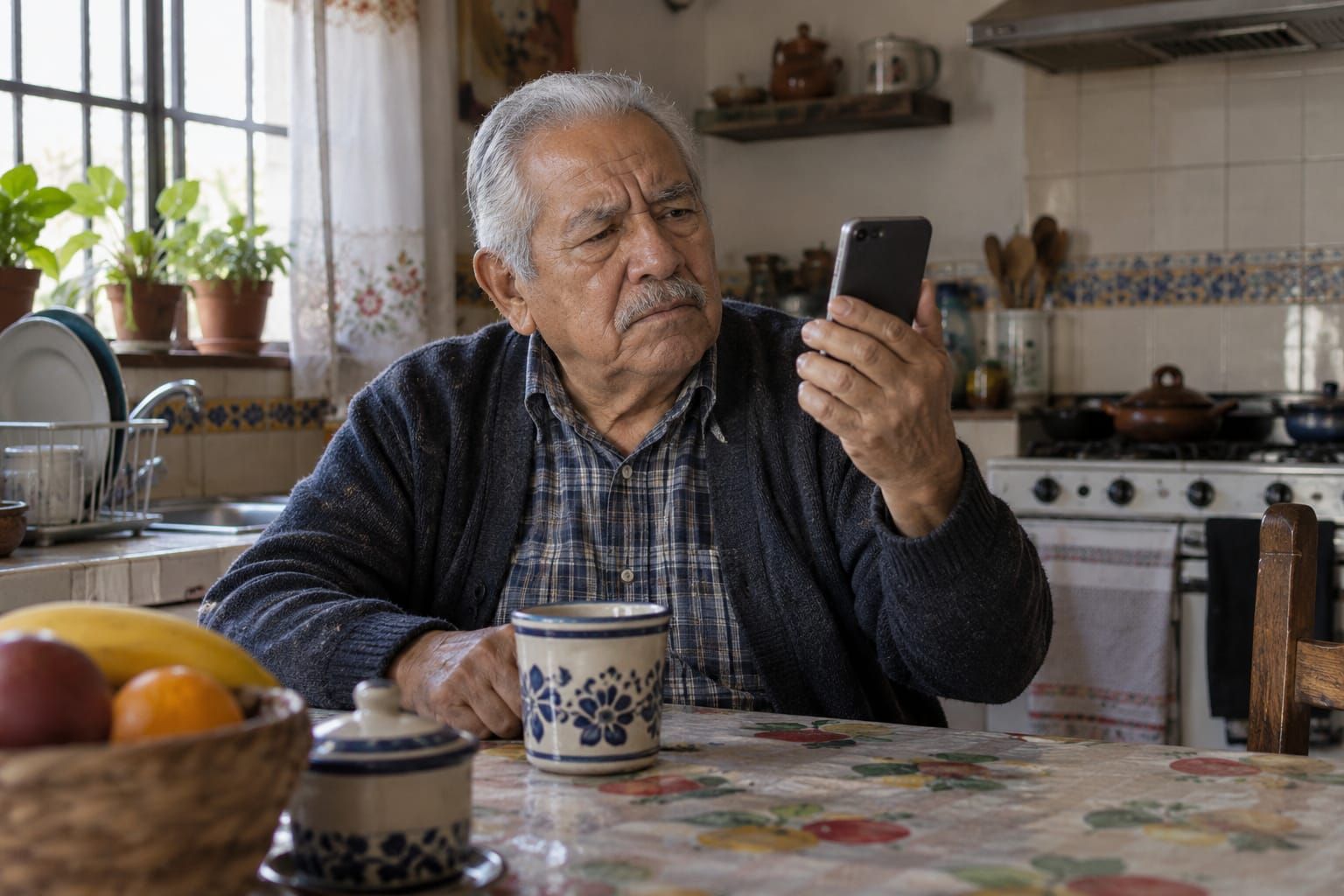
The best protection for an older parent is not a lecture. It is a calm conversation and two or three habits you both agree on: hang up, check on your own, never pay under pressure. The FTC’s “Pass It On” program is built around this idea, using the life experience older adults already have and free materials to start a talk with friends and family.
Why talk about it at all?
Scammers call people of every age. The FTC says that chances are good that someone you know has been scammed, and they may not talk about it. Sharing what you know, the FTC says, can help protect someone you care about. You do not need to be an expert, and you do not need to frighten anyone. One honest conversation is a good start.
How do you bring it up without sounding bossy?
- Start with a story, not a warning. “I got a strange call today” works better than “You need to be careful.”
- Ask what they have seen. They may already know more than you expect.
- Share rather than correct. The FTC’s approach is to pass information on, as one person to another.
- Say clearly that anyone can be fooled and that being fooled is not a failing. As the FTC puts it, scammers are good at pretending to be someone they’re not.
What are the signs of a scam call?
The FTC’s four signs are easy to remember and to repeat:
- The caller pretends to be from an organization you know, like the government, a bank or a utility company.
- The caller says there is a problem or a prize: trouble with your account, an emergency in the family, or a lottery you supposedly won.
- The caller pressures you to act right now, and may tell you not to hang up.
- The caller tells you to pay in a particular way: gift cards, a wire transfer, cryptocurrency or a payment app.
If a parent remembers only one thing, make it this: an honest organization lets you take your time.
What simple rules can you agree on?
- Caller ID is not proof. The FTC says scammers use technology to change the number and name on your screen, so a call can look like it comes from a government agency or a local number.
- Hang up and call back on a number you look up yourself. Not the number that called, and not one the caller gives you.
- Never pay with a gift card, wire, cryptocurrency or payment app because someone phoned you. The FTC says never to pay someone who insists on those methods.
- No government agency will ask you to wire money, according to the FTC. It also says the FTC itself will never tell you to move your money to “protect” it.
- Talk to someone before you do anything. A neighbor, a friend, you.
What about the “grandkid in trouble” call?
This is a well-known one. The FTC describes a call like “Grandma, I need money for bail” that is urgent and secret. The advice is to stop and check: look up your grandchild’s phone number yourself, or call another family member. The FTC also warns that scammers can use voice cloning, so a voice that sounds just like a family member is not proof. Agreeing in advance that the family will always check first can take away the panic.
What can help with the calls themselves?
The Do Not Call Registry stops sales calls from honest companies, but not scammers (details here). The FTC says call-blocking and call-labeling services can help you get fewer robocalls, though not every scam call gets flagged. If your parent hears a recorded sales pitch, the advice is the same: hang up, and don’t press buttons to speak to someone.
What if they live in Mexico?
The same habits apply, with a few local points:
- CONDUSEF says banks never ask for card numbers or financial data by phone when the customer did not start the operation. See what to do about fake bank calls.
- Mobile line registration with the CRT is free. The CRT says phone companies do not make confirmation calls, so nobody should be calling to “confirm” it. See the registration explained.
- If a parent already shared data, the checklist lists what to do in each country.
What if they were already scammed?
Be kind first. The FTC’s advice is to report it at ReportFraud.ftc.gov or on 1-877-FTC-HELP (1-877-382-4357), and to contact the company they paid through right away. In Mexico, start with the bank, as described in our checklist.
Where does our app fit?
Realcaller is an Android app that shows why a number looks risky. It is still in development and is not on Google Play, so it is not something to install for a parent today.
Advice from the FTC, CONDUSEF and CRT pages linked above, read on 2026-10-08.
